


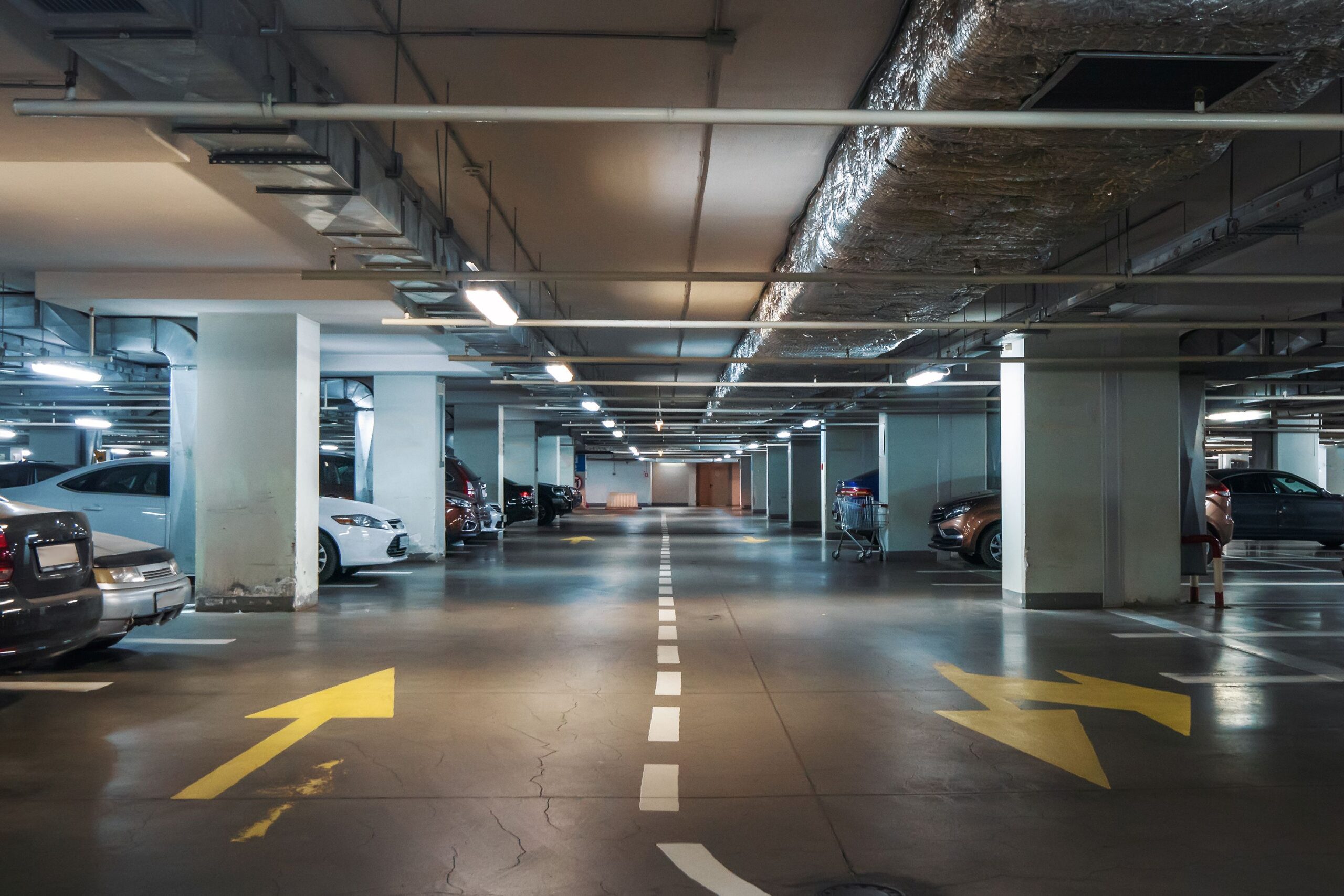

Indoor parking garages are a common feature in apartment buildings, condominiums, and mixed-use developments. While they offer convenience and protection from the elements, they also introduce a largely overlooked indoor air quality risk—especially for residents living directly above or adjacent to the garage.
Vehicle exhaust, fuel vapors, volatile organic compounds (VOCs), and other harmful hydrocarbons can accumulate inside enclosed garages and migrate into living spaces above. In many buildings, these pollutants are not directly measured, and residents may be exposed for months or even years without clear answers.
If you live above or near an indoor parking garage and experience unexplained headaches, fatigue, brain fog, or persistent odors, your indoor air quality may be playing a significant role.
This article explains how indoor parking garages affect air quality, the health risks involved, and—most importantly—the two most critical steps you should take immediately to protect yourself and your family.

Why Indoor Parking Garages Are a Hidden Indoor Air Quality Risk
Unlike outdoor parking structures, indoor and attached garages trap pollutants. Even garages equipped with ventilation systems may not effectively remove all contaminants—particularly when systems are designed only to respond to carbon monoxide (CO) at high levels.
Common pollution sources in indoor parking garages include:
- Gasoline and diesel vehicle exhaust
- Cold starts, which produce higher emissions
- Prolonged idling
- Fuel vapors and unburned hydrocarbons
- Oil, grease, and automotive chemicals
- Off-gassing from sealants, coatings, and concrete
- Renovation materials and construction adhesives
- Delivery trucks, rideshare vehicles, and service vans
Over time, these pollutants accumulate—especially in garages with poor ventilation design, inactive exhaust fans, or dead-air zones.
How Parking Garage Air Enters the Units Above
Many residents assume concrete slabs fully isolate parking garages from living spaces. In reality, air movement in buildings is complex, and contaminants often travel upward.
Garage air can enter residential units through:
- Cracks and expansion joints in concrete
- Pipe, conduit, and utility penetrations
- Elevator shafts and stairwells
- Pressure imbalances between floors
- Shared or poorly sealed HVAC systems
- The natural “stack effect,” where warm air rises
As vehicles enter and exit the garage, pressure changes can push contaminated air upward, carrying exhaust fumes and VOCs directly into apartments—often affecting first- and second-floor units most severely, but sometimes traveling much higher.

Health Implications of Living Above an Indoor Parking Garage
Garage-related air pollution often causes chronic, low-level exposure, which can be difficult to identify and easy to dismiss.
Commonly reported symptoms include:
- Persistent or recurring headaches
- Fatigue and low energy
- Brain fog or difficulty concentrating
- Dizziness or lightheadedness
- Nausea
- Burning or irritation of the eyes, nose, or throat
- Worsening asthma or respiratory symptoms
- Disrupted or poor-quality sleep
What makes this especially concerning is that these symptoms can occur even when standard carbon monoxide alarms never activate.

The Two Most Critical Steps You Should Take Immediately to Protect Yourself and Your Family
If you live above or near an indoor parking garage, these two actions are essential.
Step 1: Invest in a High-Quality Carbon Monoxide Meter (Not Just a Basic Alarm)
The first step is to install a high-quality carbon monoxide meter that displays real-time, low-level readings.
Why Standard CO Alarms Are Not Enough
Most residential carbon monoxide alarms are designed to prevent acute poisoning, not chronic exposure.
- Many alarms do not sound until levels reach 70–150 parts per million (ppm)
- Some alarms delay activation for hours
- They are not intended to show continuous or low-level exposure
However, health effects can occur far below alarm thresholds.
Low-Level Carbon Monoxide and Health
Clinical and field data show that:
- Headaches and fatigue can begin at levels under 5 ppm
- Chronic low-level exposure can impair cognitive function
- Children, older adults, and sensitive individuals may experience symptoms sooner
A digital CO meter allows you to identify patterns, such as elevated readings during morning departures, evening arrivals, or overnight idling.
Step 2: Order the IndoorDoctor On-Demand VOC Test
Carbon monoxide is only one piece of the exposure picture.
The second—and most overlooked—step is to measure volatile organic compounds (VOCs) and chemical fumes entering your living space from the parking garage.
Why VOCs Matter
Indoor parking garages contain a complex mixture of harmful airborne chemicals, including:
- Benzene
- Toluene
- Ethylbenzene
- Xylenes
- Formaldehyde
- Fuel-related hydrocarbons
- Combustion byproducts
- Solvent vapors from coatings and sealants
Many of these compounds are associated with:
- Neurological symptoms
- Respiratory irritation
- Hormonal disruption
- Increased long-term cancer risk
Yet there is typically no VOC monitoring in parking garages, even in newer buildings.
How the IndoorDoctor On-Demand VOC Testing Process Works
IndoorDoctor’s On-Demand testing was designed specifically for situations where air quality problems are intermittent, odor-driven, or time-dependent—exactly the case with parking garages.
👉 Order the IndoorDoctor On-Demand VOC Test here:
https://www.indoordoctor.com/product/8521/
1. Professional-Grade Testing Shipped Directly to You
Once ordered, IndoorDoctor ships professional-grade air sampling equipment—the same type used by certified indoor air quality inspectors.
This is not a consumer gadget. It is laboratory-analyzed testing.
2. You Collect the Sample When Air Quality Is at Its Worst
This is the most important advantage of On-Demand testing.
You take the sample:
- When you smell exhaust or chemical odors
- During peak garage activity
- After garage renovations or maintenance
- When symptoms are strongest
You are no longer guessing or hoping an inspector arrives at the right moment.
3. Simple, Guided Sampling—No Experience Required
Sampling is straightforward and clearly guided.
- Step-by-step instructions included
- Most samples take only minutes
- No technical background required
IndoorDoctor is available by phone or Zoom if needed, but most clients complete sampling easily on their own.
4. Certified Lab Analysis and Clear Results
Your sample is analyzed by a certified laboratory, and you receive:
- Identification of VOCs present
- Concentration levels
- Clear explanations of health relevance
- Actionable next steps
Results can be used for:
- Personal health decisions
- Discussions with property management
- Medical documentation
- Lease negotiations or relocation decisions
Why Parking Garage Ventilation Often Fails Residents
Most garage ventilation systems are designed around minimum code compliance, not occupant health.
Common issues include:
- Systems triggered only by high CO levels
- No monitoring of VOCs or hydrocarbons
- Inadequate airflow distribution
- Poor maintenance or disabled fans
- Design changes after construction
Additionally, garages frequently undergo renovations that introduce new off-gassing sources, increasing exposure risk without any monitoring.
Warning Signs of Garage-Related Air Quality Problems
You should strongly consider testing if you notice:
- Vehicle or fuel odors inside your unit
- Symptoms that improve when you leave the building
- Odors in hallways, stairwells, or elevators
- Worse symptoms during winter months
- Recent garage construction or sealing work
Odor is often the first warning sign, even when alarms remain silent.
Why Measurement Changes Everything
Without testing, residents are often told:
- “The garage meets code.”
- “The CO alarms aren’t going off.”
- “No one else has complained.”
Measurement replaces opinions with data—and data changes conversations.
Take Control of Your Indoor Air Quality
If you live above or near an indoor parking garage, protecting your health starts with awareness and measurement.
Start with these two steps:
- Install a high-quality digital carbon monoxide meter
- Order the IndoorDoctor On-Demand VOC Test
👉 Order your On-Demand VOC test here:
https://www.indoordoctor.com/product/8521/
Indoor air should support your health—not compromise it. On-Demand testing gives you answers on your schedule, when conditions are real, not idealized.
Citations
- U.S. Environmental Protection Agency (EPA). Carbon Monoxide’s Impact on Indoor Air Quality.
- World Health Organization (WHO). WHO Guidelines for Indoor Air Quality: Selected Pollutants.
- Agency for Toxic Substances and Disease Registry (ATSDR). Toxicological Profile for Benzene.
- National Institute for Occupational Safety and Health (NIOSH). Carbon Monoxide Exposure Limits.
- California Office of Environmental Health Hazard Assessment (OEHHA). Health Effects of Volatile Organic Compounds.
- American Lung Association. Indoor Air Pollutants and Health.