



Curvularia Mold: The Overlooked Indoor Air Quality Threat
When it comes to mold exposure, most homeowners focus on “black mold.” But some of the most medically relevant molds are less well known—and Curvularia is one of them.
Curvularia is a dark, airborne mold that can enter your home unnoticed and contribute to a wide range of health symptoms, particularly involving the respiratory system and sinuses.
Despite its potential impact, it’s often missed without proper air testing, making it a hidden risk in many homes.
What Is Curvularia Mold?
Curvularia is a genus of fungi commonly found in:
- Soil
- Grass and plant material
- Outdoor air
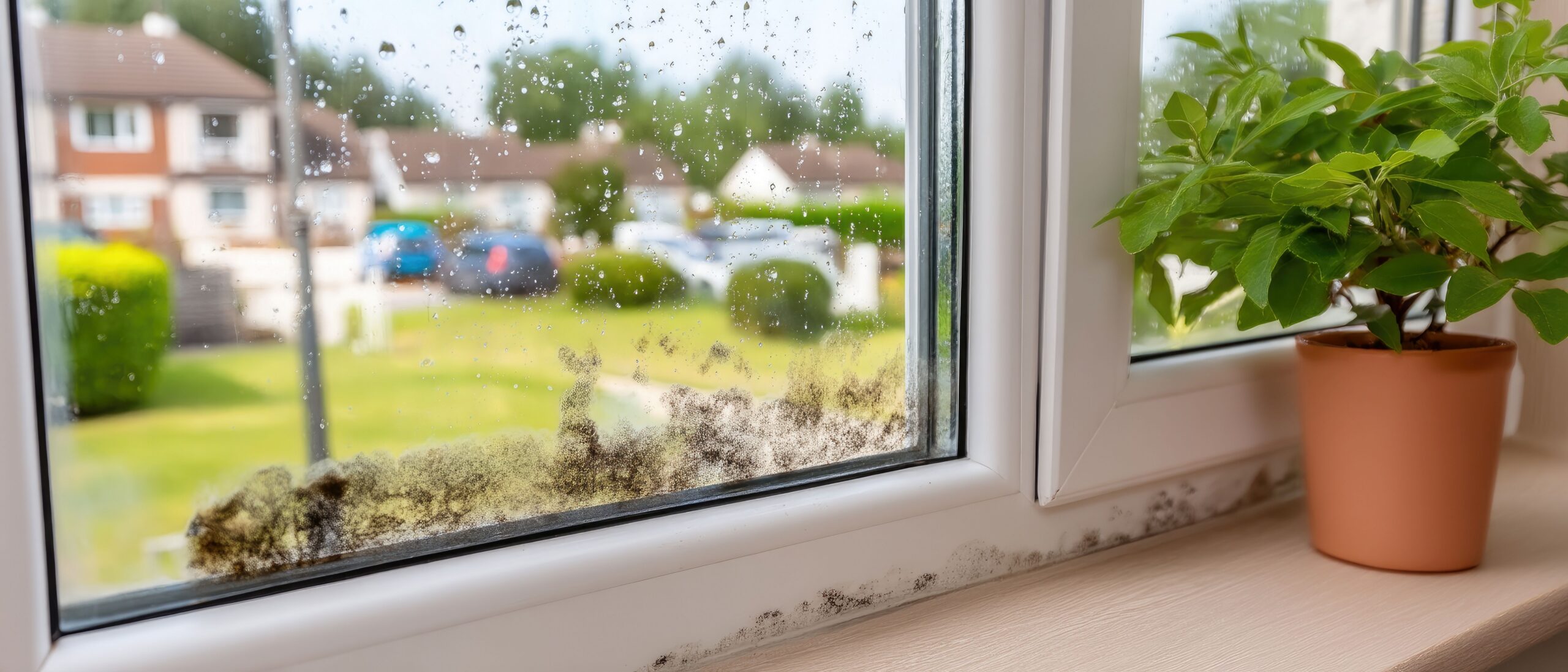
Indoors, it becomes a concern when it settles and grows in areas with moisture or humidity.
It is classified as a dematiaceous (darkly pigmented) mold, which has been associated with both allergic reactions and opportunistic infections in humans.
Where Does Curvularia Grow in Homes?
Curvularia typically enters through:
- Open windows and doors
- HVAC systems
- Shoes, pets, and clothing
Once inside, it can grow in:
- Water-damaged drywall
- Carpet and padding
- HVAC systems and ducts
- Window frames with condensation
- Basements and crawlspaces
- Behind cabinets (especially under sinks)
👉 If you’ve had any history of water damage, the risk increases significantly.

Curvularia Mold Health Effects
1. Respiratory Symptoms
Curvularia spores are easily inhaled and may contribute to:
- Chronic coughing
- Wheezing
- Shortness of breath
- Asthma flare-ups
For sensitive individuals, even low exposure levels can trigger symptoms.
2. Allergic Reactions
Curvularia is a known allergen and may cause:
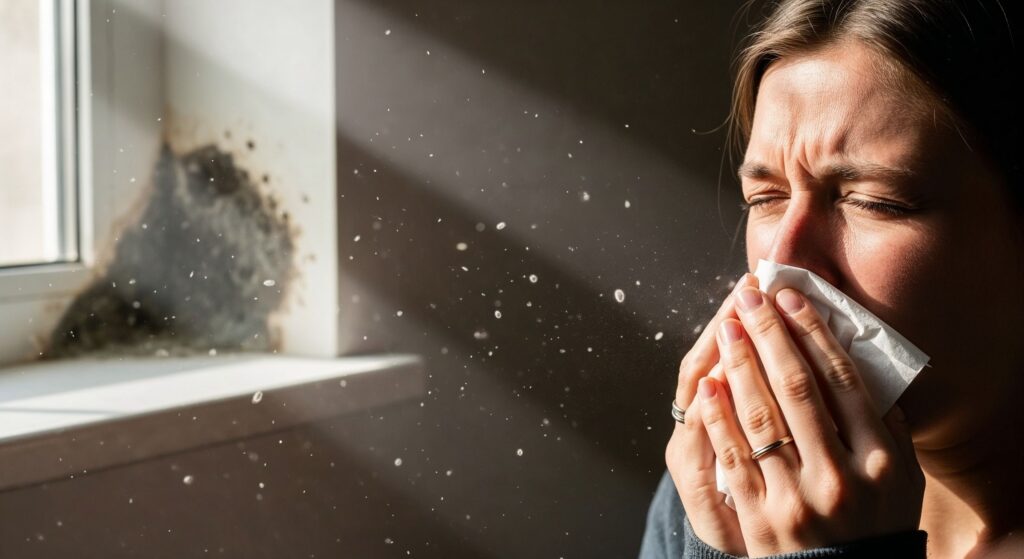
- Sneezing
- Nasal congestion
- Itchy or watery eyes
- Skin irritation
These symptoms are often mistaken for seasonal allergies.
3. Sinus Infections (A Major Concern)
Curvularia has been linked to allergic fungal sinusitis (AFS), a chronic condition that can be difficult to resolve.
Symptoms include:
- Persistent sinus pressure
- Thick nasal discharge
- Loss of smell
- Recurring infections
👉 Many clients dealing with ongoing sinus issues are unknowingly reacting to indoor mold exposure.
4. Skin and Soft Tissue Infections
Through cuts or abrasions, Curvularia can cause:
- Local infections
- Subcutaneous lesions
- Nail infections
5. Eye Infections
Curvularia has been associated with fungal keratitis, particularly in contact lens users or after eye trauma.
6. Opportunistic Infections
In rare cases, especially in immunocompromised individuals, Curvularia can lead to more serious infections involving:
- Lungs
- Bloodstream
- Central nervous system
Why Curvularia Is Often Missed
Here’s the problem:
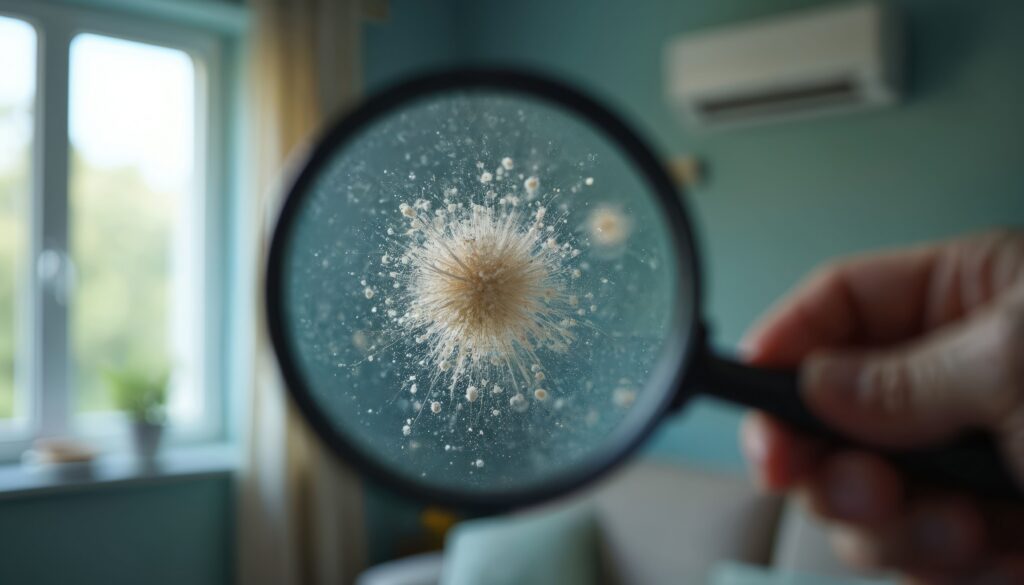
You usually won’t see Curvularia.
- It may grow behind walls or under materials
- It often exists primarily as airborne spores
- It doesn’t always produce visible colonies
That means a home can have elevated exposure without obvious signs.
Why Mold Testing Is Critical
If you’re relying on sight or smell alone, you’re guessing.
Air Testing Detects What You’re Breathing
Professional air sampling:
- Captures airborne spores
- Identifies mold types like Curvularia
- Provides quantitative results
Surface Testing Confirms Contamination
Surface samples:
- Identify visible or suspected growth
- Help locate hidden sources
Identification Changes Everything
Knowing Curvularia is present:
- Explains symptoms (especially sinus-related)
- Guides remediation decisions
- Helps prioritize urgency
The Problem with Traditional Mold Testing
Traditional mold inspections can be:
- Expensive ($500–$1500+)
- Slow to schedule
- Inconvenient
For many homeowners, this delays action—and prolongs exposure.
The IndoorDoctor Solution: On-Demand Mold Testing
IndoorDoctor has completely changed the way mold testing is done.
👉 Order your kit here:
https://www.indoordoctor.com/product/mold-virtual-testing-package/
Why IndoorDoctor Is Different
Professional-Grade Air Sampling Pumps
IndoorDoctor has made it easy and affordable to collect air and surface samples using professional-grade pumps—unlike any other company.
This is a major step up from typical DIY kits.
Most at-home kits use settle plates, which:
- Do not measure airborne exposure
- Cannot quantify results
- Often lead to misleading conclusions
IndoorDoctor uses:
- Active air sampling technology
- Lab-grade collection methods
👉 This means accurate detection of molds like Curvularia.
Expert Guidance While You Test
You’re not on your own.
IndoorDoctor provides:
- Real-time support while sampling
- Clear instructions for proper collection
Expert Consultation After Results
Once your report is ready, you’ll have access to:
- Expert interpretation
- Clear next steps
- Guidance on remediation if needed
This is something no typical DIY test provides.
Fast, Reliable Lab Results
Samples are analyzed by accredited labs, providing:
- Mold identification
- Spore counts
- Clear, actionable data
When Should You Test for Curvularia?
Consider testing if you have:
- Chronic sinus issues
- Musty odors
- Past or recent water damage
- Visible staining or discoloration
- High humidity levels
- Ongoing allergy or respiratory symptoms
👉 If symptoms persist and the cause is unclear, testing is the fastest way to get answers.
What to Do If Curvularia Is Found
If testing confirms Curvularia:
- Identify and fix the moisture source
- Address humidity issues
- Remove or clean contaminated materials
- Consider professional remediation if needed
- Retest to confirm resolution
Why Early Detection Matters
The longer mold is present:
- The more it spreads
- The greater the exposure
- The harder it becomes to remediate
Early testing allows you to:
- Act quickly
- Reduce health risks
- Avoid costly repairs
Take Control of Your Indoor Air Quality
Curvularia mold is often overlooked—but it shouldn’t be.
With its links to:
- Sinus infections
- Respiratory symptoms
- Allergic reactions
…it’s a mold that deserves serious attention.
IndoorDoctor has made it possible to test your home with:
- Professional-grade equipment
- Expert guidance
- Affordable pricing
All without waiting for a traditional inspection.
Get Started Today
👉 Order the IndoorDoctor On-Demand Mold Testing Kit:
https://www.indoordoctor.com/product/mold-virtual-testing-package/
Sources
- Centers for Disease Control and Prevention (CDC). Mold and Health Effects.
- World Health Organization (WHO). Guidelines for Indoor Air Quality: Dampness and Mould.
- Mayo Clinic. Mold Allergy Overview.
- Revankar, S. G., & Sutton, D. A. (2010). Melanized fungi in human disease. Clinical Microbiology Reviews.
- de Hoog, G. S., et al. Atlas of Clinical Fungi.
- Gupta, R., et al. Allergic fungal sinusitis caused by dematiaceous fungi.
- Environmental Protection Agency (EPA). Mold, Moisture, and Your Home.
- American Academy of Allergy, Asthma & Immunology (AAAAI). Mold Allergy.