



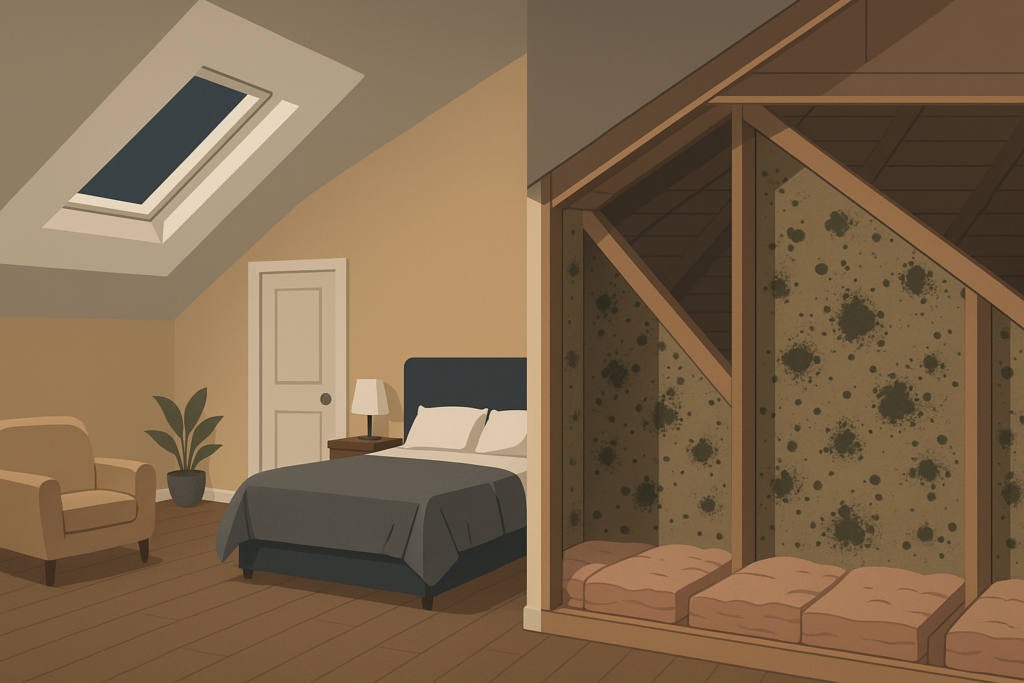
Attic mold is one of the most common hidden threats found during home inspections—yet it often goes unnoticed until it spreads, destroys insulation, stains roof sheathing, or triggers musty odors inside the living space. Because attics are out of sight, moisture problems can persist for months or years before homeowners realize there is an issue. Understanding why attic mold develops, how to test for it properly, and how to fix the root causes is essential for protecting your home, your health, and your property investment.
This updated guide provides a comprehensive, homeowner-friendly explanation of attic mold, including the science behind moisture intrusion, how imbalanced attic ventilation creates frost and mold during winter, what to do about contaminated insulation, and how professional mold testing can ensure your attic is safe.
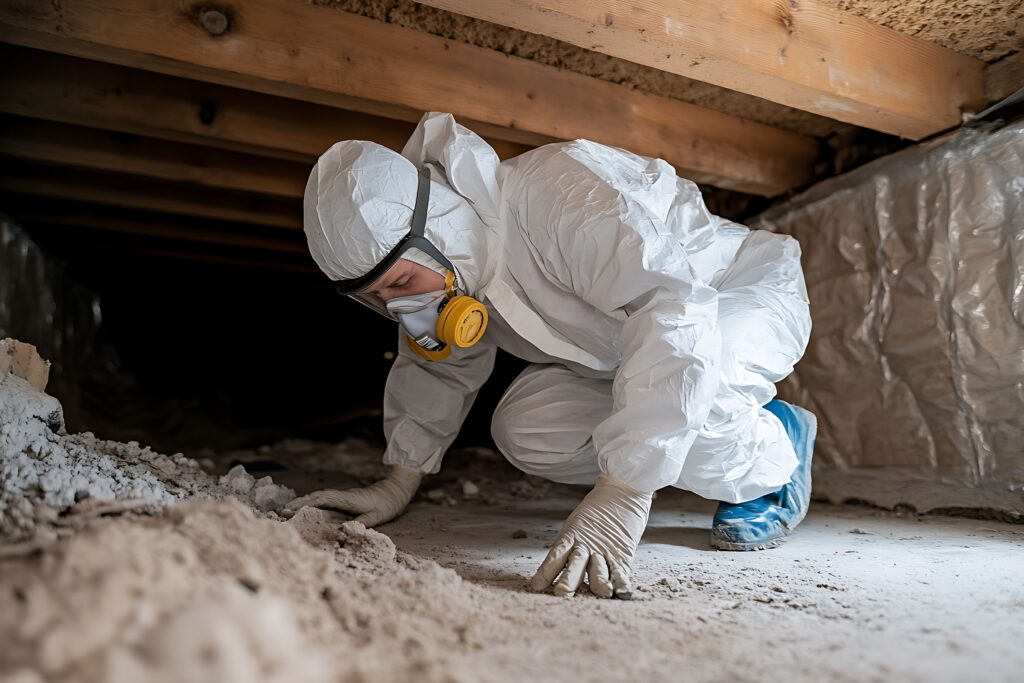
Why Attic Mold Matters More Than You Think
Although attic mold may feel distant from your living area, it can still create serious problems:
- Reduced indoor air quality as attic mold spores infiltrate the home through gaps, recessed lighting, plumbing penetrations, and attic hatches.
- Decreased roof lifespan due to moisture damage to sheathing and structural components.
- Loss of insulation effectiveness, resulting in higher heating and cooling costs.
- Failed home inspections when selling the property—attic mold is a top reason real estate transactions stall.
- Potential health symptoms for sensitive occupants, including allergy flare-ups, congestion, headaches, and respiratory irritation.
Because mold thrives on moisture and organic material, the attic environment—filled with wood framing, sheathing, and insulation—provides an ideal environment when moisture issues occur.
The Leading Causes of Attic Mold Growth
Most attic mold problems trace back to one or more of the following moisture sources:
1. An Imbalanced Attic Ventilation System
A properly functioning attic relies on a delicate balance between soffit vents (intake) and ridge vents (exhaust). When this balance is disrupted, warm, moist indoor air becomes trapped in the attic.
How a Balanced Attic System Works
A healthy ventilation system operates like a continuous airflow loop:
- Cool, dry air enters through soffit vents
- Air flows upward through the attic space
- Warm, moist air exits through the ridge vent
This passive air movement keeps humidity low and prevents heat buildup during summer.
What Happens When Ventilation Is Imbalanced
If soffits are blocked by insulation, if the ridge vent is undersized, or if one component is missing, several problems develop:
- Moisture becomes trapped in the attic
- Wood sheathing becomes cold and damp
- Mold begins to grow on rafters and roof decking
- Frost accumulates in cold weather (we’ll discuss this next)
Many homeowners are shocked to learn that a beautiful, newer home can still develop mold simply because ventilation wasn’t installed or maintained correctly.
2. Frost Accumulation in Winter—and Mold Growth When It Melts
In colder climates, attic frost is an extremely common but overlooked issue. This happens when warm, humid air from the home escapes into the cold attic and condenses on roof sheathing. If temperatures drop below freezing, the condensation becomes frost.
Why Frost Is Dangerous
Although frost itself isn’t mold, it becomes a serious problem once temperatures rise:
- The frost melts into liquid water
- The attic wood sheathing becomes saturated
- Moisture lingers in confined spaces
- Mold begins to grow within 24–48 hours
This cycle can repeat all winter long, leading to widespread mold across rafters, decking, and insulation.
Signs Your Attic Is Experiencing Frost Issues
- Dripping or wet insulation in late winter
- Darkened roof sheathing
- Water stains around nails (“nail pops”)
- Musty odor in upper floors
- Visible frost during mid-winter inspections
Attic mold caused by winter frost is almost always the result of poor ventilation or air leaks from the home below.
3. Improperly Vented Bathroom or Shower Exhaust Fans
One of the biggest contributors to attic mold is a bathroom or shower exhaust fan that vents into the attic instead of outdoors. Bathrooms produce enormous amounts of humidity, especially after hot showers.
When that moisture is dumped directly into the attic:
- Humidity rises rapidly
- Wood sheathing becomes damp
- Mold begins to colonize rafters and decking
- Insulation absorbs moisture, reducing R-value and increasing heating bills
Proper Exhaust Fan Installation
A correctly installed ventilation system:
- Uses a smooth, insulated duct
- Vents directly outdoors through the roof or gable wall
- Is sealed to prevent leaks
- Includes a backdraft damper
Even if an exhaust fan is technically ducted outside, poor connections or crushed ducts can still leak a surprising amount of moisture into the attic.
4. Contaminated or Wet Insulation
Insulation plays a major role in temperature control—but it can also become a reservoir for moisture and mold spores.
Why Insulation Becomes Contaminated
- Roof leaks dripping water into insulation
- Frost melt saturating insulation during spring
- Air leaks from bathrooms, kitchens, or living spaces
- Rodent contamination introducing organic material
Why Contaminated Insulation Must Be Removed
Wet or mold-loaded insulation:
- Loses thermal performance
- Contributes to recurring mold problems
- Releases particulates into the home
- Can hide water damage in the attic
Safe Removal Practices
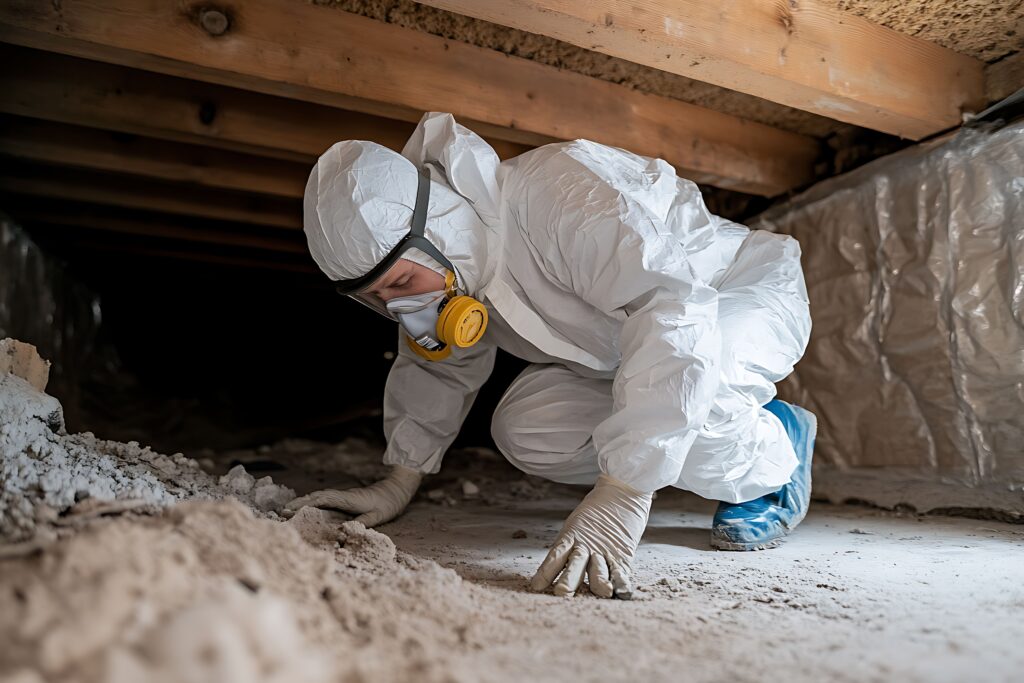
Proper insulation removal requires:
- Containment to prevent cross-contamination
- Personal protective equipment (respirator, gloves, goggles)
- HEPA-filtered vacuum systems
- Bagging and proper disposal
- Inspection of underlying roof sheathing
- Replacement with clean, dry insulation
- Rebalancing the attic system to prevent the issue from returning
A remediation professional ensures insulation removal is safe and compliant with best practices.
Why Professional Attic Mold Testing Matters
Attic mold can look deceptively uniform, but the type of mold present reveals crucial information:
- Whether the moisture issue is chronic or recent
- Whether mold levels pose an indoor air quality risk
- Whether the mold species is associated with water damage
- Whether remediation must include insulation removal, ventilation correction, or building envelope repairs
Common Attic Mold Species
IndoorDoctor frequently identifies:
- Cladosporium – thrives on cold, damp surfaces
- Penicillium/Aspergillus – often linked to moisture-damaged insulation
- Alternaria – found when chronic moisture is present
- Chaetomium or Stachybotrys – indicators of long-term water intrusion (roof leak or persistent condensation)
Each species paints a different picture of what is happening in the attic.
Testing Options for Homeowners
Many homeowners want clarity before committing to remediation. IndoorDoctor offers two options:
1. Professional On-Site Attic Mold Assessment
A trained inspector examines:
- Ventilation balance
- Signs of frost or condensation
- Insulation condition
- Exhaust fan installations
- Presence of active roof leaks
- Mold growth patterns
- Moisture readings
This is ideal for homeowners who need an expert on-site evaluation.
2. On-Demand Mold Testing Package (DIY + Expert Interpretation)
For homeowners who want a fast, affordable, and convenient option, our virtual On-Demand Mold Testing Package provides:
- Lab-certified mold cassette
- Simple sampling instructions
- Prepaid return shipping
- Professional report and recommendations
- Direct consultation with our IndoorDoctor experts
This provides the confidence of a professional test—without waiting for an in-person appointment.
Order yours here:
👉 IndoorDoctor On-Demand Attic Mold Testing
How to Prevent Attic Mold: Long-Term Solutions
Preventing attic mold requires eliminating the moisture source and ensuring the attic environment stays balanced year-round.
1. Install a Balanced Ventilation System
A properly designed system includes:
- Continuous soffit vents for intake
- Properly sized ridge vent for exhaust
- Baffles to keep soffits unobstructed
- Appropriate attic insulation to prevent heat escape
The goal is simple: keep the attic temperature close to outdoor conditions, reducing condensation.
2. Seal Air Leaks Between the Home and Attic
Air sealing prevents warm, humid indoor air from entering the attic. Seal around:
- Recessed lights
- Attic hatches
- HVAC ducts
- Plumbing penetrations
- Electrical wiring holes
Even small gaps can leak large amounts of moisture-laden air into the attic.
3. Correctly Vent Bathroom and Kitchen Exhaust Fans
Ensure all fans:
- Vent outdoors, not into the attic
- Use smooth, properly supported ducting
- Are insulated to prevent condensation
- Have airtight connections and backdraft dampers
This single correction resolves many attic mold issues.
4. Replace Contaminated or Wet Insulation
New insulation restores energy efficiency and eliminates a major reservoir of mold spores. Always correct moisture issues before reinstalling insulation.
5. Monitor Attic Conditions Seasonally
Inspect your attic at least twice per year:
- Mid-winter to check for frost
- Early spring to detect melting-related moisture
- After major storms
- Before listing your home for sale
Proactive monitoring prevents costly repairs later.
When to Call a Mold Professional
You should contact an attic mold professional if:
- You see visible mold on sheathing or rafters
- Insulation is wet, clumped, or contaminated
- You find frost buildup
- You suspect an exhaust fan is dumping moisture into the attic
- There are roof leaks or unexplained staining
- You smell musty odors in the upper floors
- You are preparing to sell your home
IndoorDoctor can diagnose your issue and guide you through remediation and prevention.
Final Thoughts: Protect Your Home by Testing Attic Mold Early
Attic mold is extremely common—and extremely preventable. By ensuring your attic ventilation is balanced, insulation remains dry, and exhaust fans are properly vented, you can eliminate the leading causes of mold growth. However, you should always confirm the presence and extent of attic mold through accurate testing, especially before remediation or before selling your home.
IndoorDoctor’s On-Demand Mold Testing Package is the fastest, easiest way to get clear answers backed by expert interpretation.
👉 Order Today: IndoorDoctor On-Demand Mold Testing
References
- EPA – “A Brief Guide to Mold, Moisture, and Your Home.”
- American Society of Heating, Refrigerating and Air-Conditioning Engineers (ASHRAE) – Ventilation Guidelines.
- Building Science Corporation – “Attic Ventilation and Mold Growth Mechanisms.”
- CDC – Mold and Indoor Health Information.
- NRCA (National Roofing Contractors Association) – Attic Ventilation Best Practices.