


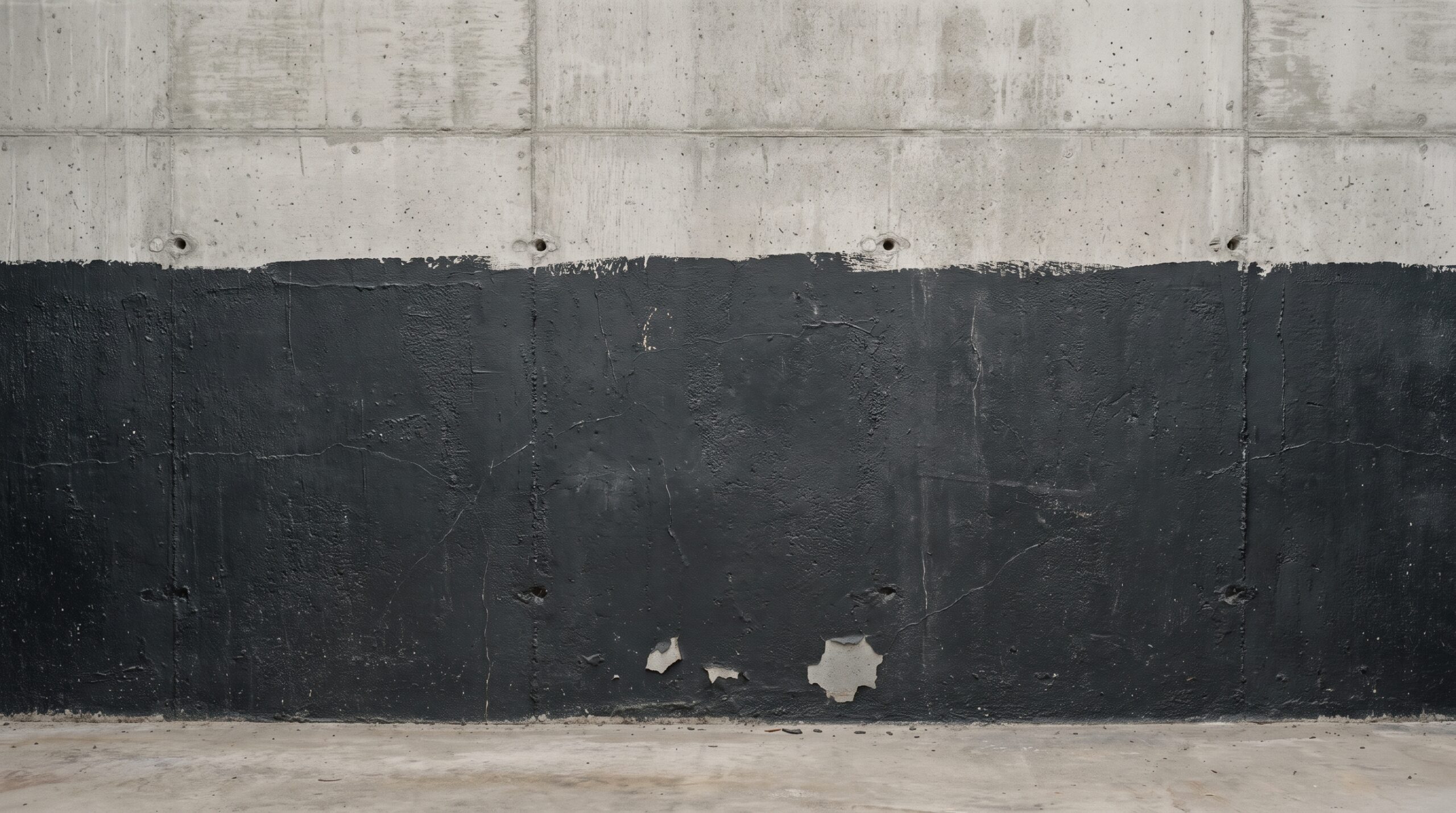

You’ve noticed a chemical smell in the basement — something between mothballs and asphalt. Maybe you just moved in. Maybe you’ve lived with it for years and finally decided to ask: is this actually safe? Here’s what that black tarry coating on your foundation walls is releasing into your air, why it doesn’t stop, and the one test that tells you exactly what your family is breathing.
If you’ve been searching for answers about the smell in your basement, you’re already doing the right thing. Most people who arrive here share the same experience: a chemical odor that won’t go away, a black coating on the foundation walls that nobody can quite identify, and a growing worry about whether it’s affecting their family’s health.
As one homeowner described it on a home improvement forum:
“What is this incredibly smelly black tarry stuff on the concrete? The basement smells incredibly bad. Kind of a musty chemical smell that gives me a headache.”
— homeowner, home improvement forumThat worry is not an overreaction. Coal tar — the material used on millions of American home foundations from the 1920s through the 1970s — is classified as a known human carcinogen by the International Agency for Research on Cancer (IARC Group 1) and the U.S. National Toxicology Program 12. The compound most responsible for that distinctive smell, naphthalene, is separately classified as a probable carcinogen 3. And research shows that homes with bituminous waterproofing membranes have measured naphthalene concentrations nearly 100 times higher than the World Health Organization’s safety guideline 3.
This article will walk you through what’s actually on your walls, what it releases into your air, and the specific test that identifies whether your exposure levels warrant action. No guessing. No waiting for the smell to “just go away.” Answers.
In this article
- What Is That Black Stuff on Your Basement Walls?
- What Chemicals Does Tar Waterproofing Release Into Your Air?
- What Are the Health Risks of Tar Off-Gassing?
- How Basement Tar Fumes Travel Through Your Entire Home
- Why Tar Off-Gassing Gets Worse in Summer — and Never Fully Stops
- When Fans, Charcoal, and Air Purifiers Aren’t Enough
- How Professional Air Quality Testing Identifies Tar Compounds
- What to Know Before Finishing a Basement with Tar-Coated Walls
- Frequently Asked Questions
- Resources
Section 01
What Is That Black Stuff on Your Basement Walls?
If you’ve peeled back old paneling, started a basement renovation, or simply looked closely at your foundation walls and found a dark, sticky, sometimes crumbly coating — you’re looking at what the construction industry calls dampproofing. Most homeowners call it “tar.” And most of them aren’t wrong.
“There is a place in the basement that has this black substance that looks like tar to me and it’s very smelly. Smells the whole basement and some of the main floor.”
— new homeownerFrom roughly the 1920s through approximately 1980, builders applied coal tar-based coatings to the exterior of concrete and block foundation walls before backfilling with soil. The purpose was to resist moisture vapor from the surrounding earth — a function called dampproofing (not waterproofing — the distinction matters, and we’ll explain why). After approximately 1980, the industry transitioned to petroleum-based asphalt products for the same purpose 4.
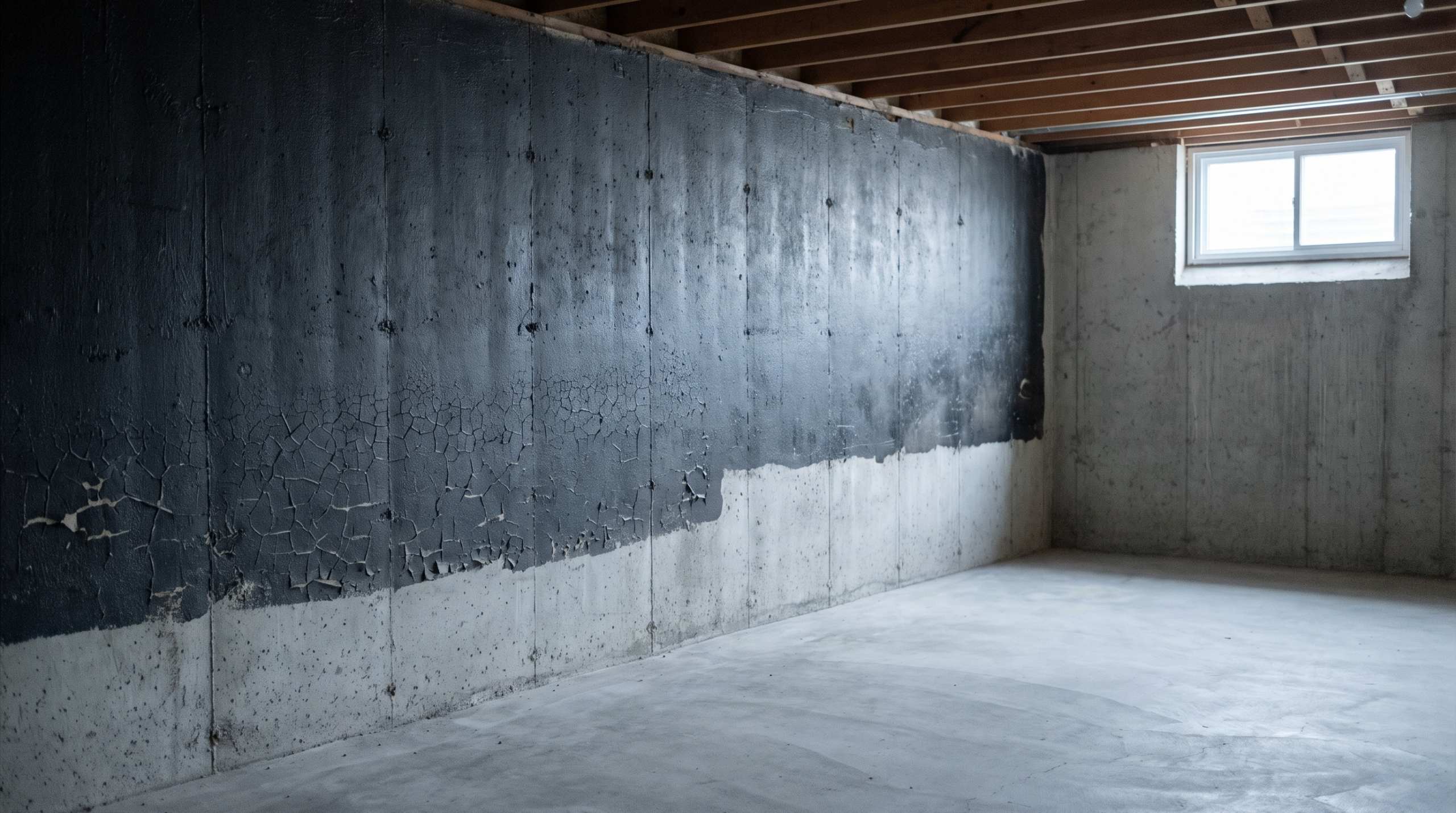
Here’s why the timing matters for your health: these two materials are chemically different in ways that dramatically affect what they release into your air.
Coal Tar vs. Petroleum Asphalt: A Critical Distinction
| Coal Tar | Petroleum Asphalt (Bitumen) | |
|---|---|---|
| Origin | Byproduct of coal carbonization (destructive distillation of coal) | Byproduct of petroleum refining |
| Aromatic hydrocarbon content | Over 90% 4 | Less than 1% 4 |
| Carcinogenicity | IARC Group 1 — known human carcinogen 2 | Not classified as carcinogenic by any agency (though oxidized bitumen emissions during high-temperature roofing operations are Group 2A) 5 |
| Relative cancer risk | 1,000–1,800 times more carcinogenic than petroleum asphalt on a weight basis 6 | Baseline reference |
| Chemical complexity | Over 400 compounds identified; up to 10,000 may be present 1 | Complex but significantly fewer hazardous compounds |
| Typical era in residential construction | Pre-1980 | Post-1980 |
The problem? You can’t tell the difference by looking at them. Both appear as black or dark brown coatings on foundation walls. Both smell. Both degrade over time. The only reliable way to determine whether your home has coal tar or petroleum asphalt is through chemical analysis — specifically, VOC testing that identifies the compound signature in your indoor air 4.
If your home was built before 1980, there is a meaningful chance you’re dealing with coal tar. If it was built after 1980, petroleum asphalt is more likely — and while less hazardous than coal tar, it still emits BTEX compounds and other volatile organic compounds, particularly as temperatures rise 7.
It’s Also Not Mold
One common source of confusion: homeowners sometimes mistake tar dampproofing for black mold. They look at the dark coating and reach for bleach. But the materials are visually and texturally distinct:
Tar / dampproofing
- Smooth, sticky, or brittle
- Doesn’t respond to bleach
- Often has a chemical or mothball smell
Mold
- Fuzzy, powdery, or thread-like
- Lightens or changes with bleach
- Has an earthy, musty smell
That said, the two problems can absolutely coexist. Tar dampproofing is not true waterproofing — it resists moisture vapor but fails against hydrostatic pressure (water-saturated soil pushing against the wall). As old tar coatings crack and degrade, moisture seeps through. Mold can colonize damp surfaces within 24–48 hours. This creates a dual-exposure scenario: chemical contamination from degrading tar alongside biological contamination from mold growth.
Section 02
What Chemicals Does Tar Waterproofing Release Into Your Air?
Understanding what tar releases helps explain why the smell persists — and why it’s more than just an annoyance. The black coating on your foundation walls is not inert. It continuously releases chemical compounds into your basement air through a process called off-gassing.
Naphthalene: The Compound Behind the Smell
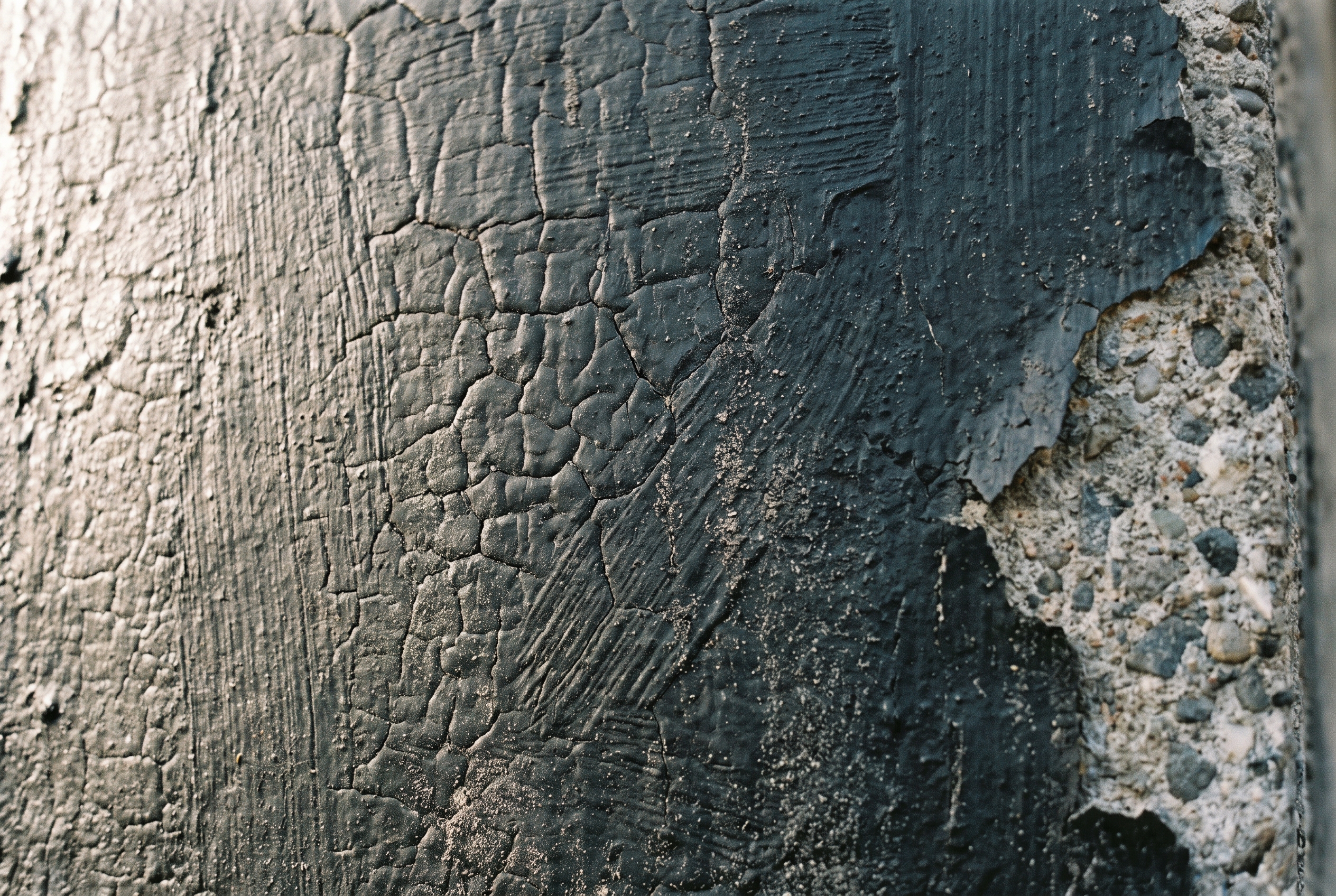
The primary volatile compound in coal tar is naphthalene — the same chemical used in traditional mothballs. If your basement smells like mothballs, tar, or a sharp chemical odor, naphthalene is very likely the reason 3.
Naphthalene is both a volatile organic compound (VOC) and a polycyclic aromatic hydrocarbon (PAH). It’s classified as “reasonably anticipated to be a human carcinogen” by the National Toxicology Program and as a Group 2B (possibly carcinogenic) agent by IARC 13.
How much naphthalene can foundation tar generate indoors? A WHO study found that homes with bituminous damp-proof membranes (similar but not identical to foundation tar coatings) measured naphthalene concentrations up to 970 micrograms per cubic meter (ug/m3) 3. For context:
- The WHO indoor air guideline for naphthalene is 10 ug/m3 3
- The EPA reference concentration (the level considered safe for continuous lifetime exposure) is 3 ug/m3 8
- That WHO measurement was nearly 100 times the safety guideline
A 2012 study found that even in the general population (not specifically homes with tar), 14% of homes exceeded the EPA reference concentration and 8% exceeded the WHO guideline 9. In homes with tar-coated foundations, the potential for elevated exposure is significantly higher.
Beyond Naphthalene: The Full Chemical Picture
Coal tar doesn’t release just one compound. Research has identified a complex mixture that may include 11011:
- Methylnaphthalenes — measured at up to 258 mg/kg in tar-treated building materials 10
- Phenols and cresols — measured at up to 92–146 mg/kg 10
- Chlorophenols — detected in Polish buildings with 1970s–1980s tar products 10
- BTEX compounds — benzene, toluene, ethylbenzene, and xylene, all released from asphalt-related products 7
- Heavier PAHs — including benzo[a]pyrene (IARC Group 1 carcinogen), chrysene, fluoranthene, and pyrene 11
Coal tar pitch fumes contain more than 90% aromatic hydrocarbons 4. By comparison, petroleum asphalt fumes contain less than 1% 4. This is why the distinction between coal tar and asphalt matters so much for your health — and why visual identification alone is not enough. When dampproofing fumes are present in your home, the type of coating determines the urgency of your response.
Professional chemical air quality testing using EPA Method TO-15 can identify these specific compounds individually, telling you not just that “something is in the air” but exactly which chemicals are present and at what concentrations.
Section 03
What Are the Health Risks of Tar Off-Gassing?
You’re reading this because something doesn’t feel right — and understanding what you might be breathing is part of making an informed decision about what to do next.
If the chemical smell in your basement has been giving you headaches, making you nauseous, or irritating your throat — and you’ve been wondering, “is my home making me sick?” — your body is responding to something real. These are not imagined symptoms.
“It literally gives the family a headache its that bad.”
— homeowner whose contractor applied bitumen primer to interior wallsThe health effects of tar off-gassing depend on the specific compounds present, the concentration in your air, the duration of your exposure, and your individual vulnerability. Here is what the medical and toxicological literature documents.
Symptoms of Tar Off-Gassing Exposure by Body System
| Body System | Reported Symptoms | Primary Chemical Driver |
|---|---|---|
| Respiratory | Throat irritation, coughing, wheezing, shortness of breath, nasal congestion, asthma exacerbation | Naphthalene, VOCs (toluene, xylene), PAH irritants 312 |
| Neurological | Headaches, dizziness, difficulty concentrating, confusion, fatigue, cognitive impairment | Naphthalene, toluene (crosses blood-brain barrier), benzene 312 |
| Gastrointestinal | Nausea, loss of appetite, abdominal discomfort | Naphthalene (acute inhalation), VOC mixture effects 3 |
| Eyes & Skin | Eye irritation, watering eyes, skin irritation or rash | VOC irritants, naphthalene vapors 3 |
| Hematological | Hemolytic anemia (destruction of red blood cells), jaundice — particularly in individuals with G6PD deficiency | Naphthalene metabolites (alpha-naphthol causes oxidative damage to red blood cells) 312 |
| Carcinogenic (long-term) | Lung, skin, bladder, kidney, and digestive tract cancers documented in occupational coal tar exposure studies | PAHs (benzo[a]pyrene — IARC Group 1), benzene (IARC Group 1 — acute myeloid leukemia) 1212 |
A critical point: health effects from naphthalene can occur at concentrations below the typical odor detection threshold. The EPA reference concentration for chronic non-cancer effects is 3 ug/m3 8. The mean odor detection threshold for naphthalene is approximately 440 ug/m3 38 — more than 100 times higher. While some individuals can detect naphthalene at lower concentrations (as low as 7.5 ug/m3), two things remain true:
- If you can clearly smell it, the concentration is very likely elevated well above health guidelines.
- If you can’t smell it, that does not guarantee safety. Olfactory fatigue (your nose adapting to a persistent smell) and sub-olfactory concentrations can both create exposure without awareness.
Who Is Most at Risk?
Certain populations face heightened vulnerability to tar-related chemical exposure:
| Population | Why They’re More Vulnerable | Key Concern |
|---|---|---|
| Children | Higher breathing rates relative to body weight (~2x adult rate per kg), immature metabolic and detoxification pathways, developing organ systems more susceptible to toxic insult 312 | Greater per-kg inhalation dose of VOCs and PAHs; respiratory and neurological effects |
| Infants | Lower glutathione stores, immature liver enzymes. G6PD deficiency (affects ~400 million people worldwide) dramatically increases naphthalene sensitivity 12 | Severe hemolytic anemia documented in neonates from naphthalene vapor exposure; potential kernicterus (brain damage) in G6PD-deficient infants 12 |
| Pregnant women | PAHs cross the placental barrier; fetal exposure during critical developmental windows 13 | Reduced birth weight, increased respiratory infections in offspring, potential neurodevelopmental effects 13 |
| People with asthma or COPD | Pre-existing airway inflammation amplifies response to irritant VOCs 12 | Asthma exacerbation, increased bronchospasm, accelerated lung function decline |
If you have young children spending time in a basement playroom or bedrooms below grade, or if anyone in your household is pregnant or has respiratory conditions, the urgency of understanding your exposure level increases significantly. IndoorDoctor’s Chemical Air Assessment was designed for exactly this scenario — measuring what’s actually in the air your family breathes so you can make informed decisions, not anxious guesses.
Section 04
How Basement Tar Fumes Travel Through Your Entire Home
One of the most common misconceptions about basement air quality is that what happens in the basement stays in the basement. It doesn’t. Building science research indicates that as much as 50% of the air on your first floor can originate from below-grade spaces — your basement or crawl space — particularly in homes with strong stack effect conditions 1415.
This happens through a phenomenon called the stack effect.
The Stack Effect: Your House Works Like a Chimney
Warm air inside your home naturally rises. As it exits through the upper levels (through attic vents, gaps around windows, exhaust fans), it creates negative pressure at the lowest level of the house. That pressure difference draws air upward from the basement — pulling whatever is in that air along with it 14.
The pathways are everywhere:
- Open staircases — the most obvious and largest pathway
- HVAC ductwork — if your heating or cooling system draws from the basement, it actively distributes basement air throughout the house
- Gaps around pipes, wires, and plumbing penetrations — every hole in the floor between your basement and first floor is a pathway
- Cracks in floors and along sill plates — even small gaps add up to significant air exchange 15
“Smell is magnified by using the basement dryer or the main floor kitchen. The basement dryer is unusable as the clothing has a strong smell after use.”
— homeowner, after exterior waterproofing workThis is the stack effect in action. The dryer creates additional negative pressure, pulling more basement air (and its chemical load) into the living space. Kitchen exhaust fans do the same thing. These aren’t just anecdotal observations — they’re predictable physics.
What This Means for Tar Off-Gassing
The tar off-gassing compounds identified in the previous section — naphthalene, BTEX, PAHs — do not stay in your basement. They migrate through the entire building envelope via the stack effect and mechanical systems. A VOC testing protocol typically samples air from multiple locations (basement, first floor, and outdoors) specifically to measure this distribution and confirm whether a basement source is affecting upper living spaces.
This is why tar waterproofing is not just a “basement problem.” It’s a whole-house indoor air quality concern.
Section 05
Why Tar Off-Gassing Gets Worse in Summer — and Never Fully Stops
If you’ve noticed the smell intensifying during warm weather, you’re not imagining it. Temperature is the single biggest driver of how much tar off-gasses at any given time.
The Temperature Effect
A landmark 2020 study by researchers at Yale and Carnegie Mellon found that exposure to moderate solar radiation increased VOC emissions from asphalt products by up to 300% 7. Subsequent research confirmed that VOC emissions at moderate service temperatures (20–70°C / 68–158°F) are persistent and increase substantially with temperature 16.
“After a year and a half, particularly when very hot outside and using air conditioning, I could still feel the smell to a certain degree.”
— homeownerFoundation walls are partially insulated by the surrounding soil, so they don’t reach the extreme temperatures of a rooftop. But basement temperatures do rise in summer — and the relationship between temperature and off-gassing is not linear. Even moderate temperature increases drive meaningful emission spikes 716. Summer is consistently the worst season for tar off-gassing, which also makes it the optimal time for air quality testing.
The Myth That Tar “Cures” and the Smell Goes Away
If a contractor, forum poster, or friend has told you the smell will eventually go away once the tar “cures” — that’s one of the most persistent misconceptions in home improvement communities, and it’s worth addressing head-on.
It’s a common assumption that tar eventually dries, hardens, and stops releasing fumes. Research tells a different story. The Yale/Carnegie Mellon study found that after extended warming, asphalt products released a lower but constant amount of volatile compounds — emissions “persisted at a steady rate” and did not cease 7. Adding sunlight triggered new spikes on top of the steady baseline.
European building research documented something even more striking: buildings constructed in the 1970s and 1980s with tar products and bituminous seals continued emitting naphthalenes, phenols, cresols, and other organic vapors decades after installation — significantly worsening indoor air quality in structures over 40 years old 10.
The initial burst of strong off-gassing does diminish over time as the most volatile compounds evaporate first. This is why some homeowners report improvement in the first weeks or months. But the underlying steady-state emissions continue indefinitely at a lower rate 7. And olfactory fatigue — your nose adapting to a constant smell — can make you think the problem is gone when it’s only gone from your perception.
“The waterproof company installed a Humidex ventilation system in the basement. This greatly improved the situation. At this point I no longer notice any smell, but I imagine what was used has now cured.”
— homeownerThe improvement was likely real (ventilation dilutes the concentration). But “cured”? The chemistry says otherwise.
This is precisely why air quality testing provides clarity that your nose cannot. Testing measures what’s actually present — not what you can perceive.
Section 06
When Fans, Charcoal, and Air Purifiers Aren’t Enough
If you’ve been dealing with a tar smell in your basement, chances are you’ve already tried some or all of the following. These are the most commonly attempted remedies across homeowner forums — and there are good reasons why each one helps but none of them solve the problem.
“Based on suggestions, we have tried to pour water down two floor drains, used duct tape to seal the two floor drains, multiple fans, charcoal, vinegar, and an air purifier. The smell has not reduced.”
“We have tried ventilation, air purifiers with carbon, sealing our sump pump. Nothing is working.”
— homeowner, after two months with no improvementWhy Each Common Remedy Falls Short
| Remedy | Why People Try It | Why It’s Not Enough |
|---|---|---|
| Opening windows / fans | Increases ventilation, dilutes concentration | Only works while windows are open. Basement windows are often small and insufficient for the volume of off-gassing. Does not address the source. |
| Activated charcoal / carbon filters | Carbon adsorbs some VOCs | Limited adsorption capacity — saturates and needs frequent replacement. Cannot keep up with continuous off-gassing from a large surface area (an entire foundation wall). |
| Air purifiers with carbon filters | Circulates air through carbon medium | Same capacity limitation as loose charcoal. HEPA filters capture particles but not gases/vapors. Most consumer units are undersized for sustained VOC loads from a major source. |
| Sealing floor drains / sump pump | Blocks one potential entry point | Tar fumes migrate through the masonry itself, through cracks, through joints, and through the stack effect. Sealing one opening doesn’t address the other pathways. |
| Vinegar / baking soda | General odor neutralizers | These work on biological odors. They have no chemical effect on VOCs or PAH off-gassing. |
| Painting over the tar (latex paint) | Attempts to seal the surface | Standard latex paint provides minimal vapor barrier. The tar continues off-gassing behind the paint, and fumes migrate through the permeable paint film and through any gaps at edges, joints, or penetrations. |
| Oil-based primers (BIN, Kilz Original) | Better seal than latex | More effective short-term barrier, but does not stop off-gassing into the wall cavity or through masonry pathways. Encapsulation is a partial measure, not a solution. |
None of these approaches are wrong — most of them provide some temporary reduction in the perceived smell. But they all share the same fundamental limitation: they address the symptoms (the smell) without diagnosing the source (which specific chemicals, at what concentrations).
This matters because the appropriate response depends entirely on what’s actually in the air. If testing shows naphthalene at 5 ug/m3 (above the EPA reference concentration but moderate), improved ventilation might be a reasonable management strategy. If testing shows naphthalene at 500 ug/m3, you’re dealing with a fundamentally different situation that requires more aggressive intervention.
You can’t calibrate your response without data. This is the moment where professional air quality testing stops being a nice-to-have and becomes the logical next step.
Section 07
How Professional Air Quality Testing Identifies Tar Compounds
One of the most striking patterns in homeowner forums is the “who do I call?” confusion. People reach out to plumbers, HVAC technicians, waterproofing contractors, general contractors, and even fire departments — and none of them can diagnose what’s in the air.
“Today we had a plumber out to see if he had any other suggestions and he stated there was nothing he could think of to abate the smell.”
This isn’t a criticism of those professionals. Plumbers test pipes. HVAC technicians test airflow. Fire departments carry LEL meters that detect explosive gas concentrations — but those instruments measure whether the air will ignite, not whether it’s healthy to breathe. None of these trades have the equipment to identify specific airborne chemical compounds at health-relevant concentrations.

That’s what professional air quality testing does — specifically, a method called EPA Method TO-15.
What EPA Method TO-15 Testing Actually Measures
EPA Method TO-15 is the gold standard for identifying volatile organic compounds in indoor air. Here’s how it works 1718:
Sample collection. A specially treated stainless-steel SUMMA canister is placed in the breathing zone (3–6 feet above the floor) and collects a whole-air sample over an 8–24 hour period. This captures what you’re actually breathing over a normal day — not a point-in-time snapshot.
Laboratory analysis. The sample is analyzed using Gas Chromatography/Mass Spectrometry (GC/MS), which separates the air sample into individual compounds and identifies each one. This is the only analytical method capable of both identifying and quantifying specific target compounds 17.
Detection sensitivity. Reporting limits are typically between 0.01 and 0.2 parts per billion by volume (ppbv) — far below health-relevant concentrations and orders of magnitude more sensitive than any consumer-grade VOC monitor 1718.
Multi-location sampling. Professional protocol includes sampling in the basement (near the source), on the first floor (to measure distribution), and outdoors (to establish the background baseline). Comparing these three locations confirms whether an indoor source is present and how far its impact extends 17.
What Testing Reveals for Tar Off-Gassing
For homes with tar waterproofing, EPA Method TO-15 can identify 1718:
- Naphthalene — the primary indicator compound for coal tar off-gassing
- Benzene, toluene, ethylbenzene, xylene (BTEX) — present in both coal tar and petroleum asphalt emissions
- Styrene and other aromatic hydrocarbons — additional coal tar markers
The compound profile also helps determine whether you’re dealing with coal tar or petroleum asphalt — coal tar produces a naphthalene-dominant signature with PAH markers, while petroleum asphalt produces a different VOC profile 4. This distinction directly affects the urgency and type of response.
Consumer-grade VOC monitors (the handheld devices available at hardware stores) read a single aggregate “total VOC” number. They cannot tell you which compounds are present, which is critical for health assessment. A total VOC reading of 500 ppb could mean 500 ppb of relatively benign compounds or 500 ppb dominated by benzene (a known human carcinogen). Only laboratory analysis distinguishes between the two.
IndoorDoctor’s Chemical Air Assessment
IndoorDoctor’s Chemical Air Assessment ($499) combines professional-grade testing with expert interpretation. You don’t get a lab report and a “good luck figuring it out.” You get:
- Live Zoom consultation with an indoor air quality expert who has reviewed over 30,000 indoor environments — someone who can tell you exactly what your results mean, whether your levels are concerning, what’s likely causing them, and what your options are
- Professional-grade SUMMA canister sampling equipment shipped to your home
- Accredited laboratory analysis (EPA Method TO-15) identifying 70+ individual VOCs at parts-per-billion sensitivity
The testing tells you what’s in your air. The consultation tells you what to do about it. That’s the difference between data and answers.
IndoorDoctor is a testing-only company. They don’t sell remediation services, which means their assessment has no financial incentive to find (or exaggerate) a problem. The recommendation is always based on what the data shows.
Section 08
What to Know Before Finishing a Basement with Tar-Coated Walls
This section could save you from an expensive mistake. If you’re planning to finish your basement — framing walls, insulating, installing drywall — and there’s an old tar coating on the foundation walls, what you do next matters enormously for your family’s long-term air quality.
“The best route is to grind off the remaining tar versus encapsulating it as the off gassing will still find a way into the house.”
— experienced homeowner, building forum
The Double Vapor Barrier Problem
Tar coatings function as Class I vapor barriers — they’re essentially impermeable to moisture vapor. If you then install a standard interior plastic vapor retarder (poly sheeting) on the warm side of the stud wall, you’ve created a moisture trap: two impermeable layers with insulation sandwiched between them 1920.
This creates multiple problems simultaneously:
- Moisture condensation and mold: Any moisture that enters the cavity (from either direction) has no way to dry. Mold, decay, and corrosion develop in the hidden wall cavity 19.
- VOC trapping: The tar continues off-gassing, but the fumes are now trapped in an enclosed wall cavity with no ventilation path. Building science reasoning indicates this can result in prolonged accumulation that eventually migrates into the living space through drywall joints, electrical outlets, and any other penetration 20.
- Odor that can’t be addressed: Once the walls are finished, you can’t ventilate the cavity, can’t treat the source, and can’t even access it without demolition.
The Right Approach (According to Building Science)
Building science research recommends the following approach for insulating foundation walls with tar coatings 192021:
Test the air first. Before making any irreversible decisions, identify what the tar is releasing and at what concentrations. This determines whether the coating requires removal, can be encapsulated with appropriate materials, or is emitting at levels manageable with proper assembly design.
Install rigid foam board insulation (minimum 2 inches of extruded polystyrene or polyisocyanurate) directly against the foundation wall. Seal all joints with tape or spray foam. This provides both insulation and an air barrier.
If using stud walls, use unfaced batts in the stud cavity. Do NOT install an interior vapor retarder (no poly sheeting) 21.
Never install interior plastic vapor barrier against a tar-coated wall. The tar is already the vapor barrier.
Remove, Encapsulate, or Cover? The Decision Tree
The forum debate between “grind it off” and “just cover it” never resolves because the right answer depends on data most homeowners don’t have:
- What is the coating? Coal tar requires more caution than petroleum asphalt.
- What is it emitting? Active off-gassing levels determine urgency.
- What is the room’s intended use? A storage area has different standards than a child’s bedroom.
An air quality assessment provides the data that transforms this from a forum debate into an informed decision. The results tell you whether aggressive removal is warranted, whether proper encapsulation and assembly design is sufficient, or whether the emission levels are low enough that standard building practices will manage the exposure.
Frequently asked
Frequently Asked Questions
After reading through the science and the testing process, you likely still have specific questions about your situation. Here are the ones we hear most often.
Is tar waterproofing toxic?
Coal tar is classified as a known human carcinogen (IARC Group 1) by the International Agency for Research on Cancer and the U.S. National Toxicology Program 12. Coal tar pitch fumes contain more than 90% aromatic hydrocarbons, and occupational exposure studies have documented significantly elevated rates of lung, skin, bladder, kidney, and digestive tract cancers 14. Petroleum-based asphalt is significantly less hazardous — it is not classified as carcinogenic by any agency — but it still emits BTEX compounds and is classified as Group 2A (probably carcinogenic) when heated to produce oxidized bitumen emissions 5. If your home was built before 1980, the foundation coating may be coal tar.
What does tar off-gassing smell like?
Tar off-gassing most commonly produces a mothball-like, chemical, or asphalt-like odor. The mothball smell is specifically naphthalene — the most volatile PAH in coal tar and the active ingredient in traditional mothballs 3. Some homeowners describe it as similar to paint thinner, kerosene, or a sharp chemical smell. The scent may be stronger during warm weather, when using appliances that create negative pressure in the basement (dryers, kitchen exhaust fans), or after the space has been closed up.
Does tar waterproofing ever stop off-gassing?
No. Research published in Science Advances found that asphalt products continue emitting VOCs indefinitely — emissions “persisted at a steady rate” even after extended warming periods 7. European building research documented that structures built in the 1970s–1980s with tar products continued emitting naphthalenes, phenols, and cresols decades after installation 10. The initial high-rate off-gassing diminishes over the first weeks to months as the most volatile compounds dissipate, but steady-state emissions persist at a lower rate over the life of the material.
Can basement tar fumes reach my first floor?
Yes. Building science research documents that up to 50% of first-floor air can originate from below-grade spaces through the stack effect — warm air rising through the home creates negative pressure that pulls basement air upward 14. Pathways include open staircases, HVAC ductwork, gaps around pipes and wires, and cracks in floors. If you can smell the tar anywhere above the basement, the stack effect is already distributing those compounds through your living space.
Are children more at risk from tar off-gassing?
Yes, children face higher risk for multiple reasons: they breathe approximately twice the volume of air per kilogram of body weight compared to adults, their metabolic and detoxification pathways are immature, and their developing organ systems are more susceptible to chemical insult 312. Infants are particularly vulnerable to naphthalene-induced hemolytic anemia, especially those with G6PD deficiency — a genetic condition affecting approximately 400 million people worldwide, with higher prevalence in populations of African, Mediterranean, and Asian descent 12.
Is the tar on my foundation coal tar or asphalt?
Visual identification is unreliable — both appear as black or dark brown coatings. As a general heuristic, homes built before approximately 1980 are more likely to have coal tar; post-1980 construction typically used petroleum-based asphalt. However, the only reliable determination is chemical testing. EPA Method TO-15 VOC analysis identifies the chemical signature: coal tar produces a naphthalene-dominant profile with PAH markers, while petroleum asphalt produces a different compound profile 417.
Why didn’t the home inspector catch this?
Standard home inspections focus on structural integrity, electrical, plumbing, and visible defects — they do not include air quality testing for chemical compounds 17. A home inspector may note visible dampproofing on foundation walls but has no way to assess what it’s releasing into the air. Identifying specific VOC compounds at health-relevant concentrations requires laboratory analysis (EPA Method TO-15) using specialized sampling equipment — this is a separate service from a home inspection 1718.
Can tar waterproofing cause mold?
Indirectly, yes. Tar-based coatings provide dampproofing (resistance to moisture vapor) but not true waterproofing (resistance to liquid water under pressure). As these coatings age, crack, and degrade, moisture intrusion occurs through the failed coating. Mold colonies can establish on damp surfaces within 24–48 hours. This creates the potential for dual exposure — chemical contamination from degrading tar plus biological contamination from mold. If you suspect both tar off-gassing and mold, IndoorDoctor offers both chemical and mold air assessments.
Should I test my home’s air if I smell tar in the basement?
Yes. If you can smell tar or mothballs, the naphthalene concentration in your air very likely exceeds health guidelines — the EPA reference concentration (3 ug/m3) is far below the typical odor threshold (440 ug/m3) 38. Testing tells you which compounds are present, at what concentrations, and whether those levels warrant remediation action. It also establishes a baseline that you can retest against after any remediation work to confirm the intervention actually worked. IndoorDoctor’s Chemical Air Assessment ($499) includes professional-grade sampling equipment, accredited lab analysis, and a live Zoom consultation where an expert walks you through every result.
What’s the difference between dampproofing and waterproofing?
Dampproofing resists moisture vapor migration through foundation walls — it’s a coating (often tar or asphalt-based) applied to the exterior of the foundation before backfilling. Waterproofing resists liquid water under hydrostatic pressure and typically involves membrane systems, drainage boards, and/or interior drainage systems. Most pre-1980 homes received only dampproofing, not true waterproofing, which is why basement moisture problems are so common in older homes despite the tar coating being present.
How much does air quality testing for tar off-gassing cost?
IndoorDoctor’s Chemical Air Assessment is $499, all-inclusive. That covers professional-grade SUMMA canister sampling equipment shipped to your home, accredited laboratory analysis via EPA Method TO-15 (identifying 70+ individual VOC compounds), and a live Zoom consultation with an indoor air quality expert who explains your results and recommends next steps. There are no hidden fees, no upsells, and no remediation sales — IndoorDoctor is a testing-only company. For homeowners in New England (NH, MA, CT, RI, ME), in-person on-demand testing is also available.
Resources
Resources
Relevant Statistics
| Statistic | Value | Source | Year |
|---|---|---|---|
| Aromatic hydrocarbon content: coal tar vs. petroleum asphalt fumes | >90% vs. <1% | OSHA Standard Interpretation (citing Niemeier et al.) 4 | 1983 |
| Carcinogenicity: bitumen vs. coal tar paint | Bitumen 1,000–1,800x less carcinogenic (weight basis) | IARC Monograph Vol. 35 6 | 1985 |
| Compounds identified in coal tar | Over 400; up to 10,000 may be present | NTP 15th Report on Carcinogens 1 | 2021 |
| First-floor air originating from basement/crawl space | Up to 50% | Building science research (multiple sources) 14 | Multiple |
| VOC emission increase with solar radiation (asphalt products) | Up to 300% | Khare et al., Science Advances 7 | 2020 |
| Naphthalene in homes with bituminous membranes | Up to 970 ug/m3 | WHO Guidelines for Indoor Air Quality 3 | 2010 |
| WHO naphthalene indoor air guideline | 10 ug/m3 (annual average) | WHO 3 | 2010 |
| EPA naphthalene reference concentration (RfC) | 3 ug/m3 (chronic non-cancer) | EPA IRIS 8 | 1998 |
| General homes exceeding EPA naphthalene RfC | 14% | Batterman et al., Indoor Air 9 | 2012 |
| OSHA PEL for coal tar pitch volatiles | 0.2 mg/m3 (8-hr TWA) | OSHA 29 CFR 1910.1002 22 | Current |
| G6PD deficiency global prevalence | ~400 million people affected | Cleveland Clinic; WHO 12 | — |
| Polish buildings emitting tar VOCs decades post-installation | Naphthalene, phenols, cresols detected in 1970s–80s structures | Staszowska, Sensors (MDPI) 10 | 2020 |
| Coal tar sealant PAH content vs. asphalt sealant | ~1,000x more PAHs in coal tar | USGS 23 | Multiple |
| Austin TX PAH decline after coal tar ban | 58% decline in lake sediment PAHs | USGS 23 | 2017 |
Glossary
Plain definitions for the technical terms used above. Each term is linked from where it first appears in the article.
- BTEX (Benzene, Toluene, Ethylbenzene, Xylene)
- A group of four volatile organic compounds commonly found in petroleum products and coal tar. Benzene is a known human carcinogen (IARC Group 1). All four are detectable through EPA Method TO-15 air sampling. ↑ Back to top
- Coal Tar
- A thick, dark liquid produced as a byproduct of coal carbonization (the destructive distillation of coal). Contains over 400 identified chemical compounds, including numerous PAHs. Classified as a known human carcinogen by IARC (Group 1) and the National Toxicology Program. Used extensively in foundation dampproofing from the 1920s through the 1970s. ↑ Back to top
- Dampproofing
- A coating applied to foundation walls to resist moisture vapor migration through the concrete or masonry. Dampproofing is NOT the same as waterproofing — it cannot resist liquid water under hydrostatic pressure. Common dampproofing materials include coal tar (older homes) and petroleum asphalt (modern construction). ↑ Back to top
- G6PD Deficiency (Glucose-6-Phosphate Dehydrogenase Deficiency)
- A genetic enzyme deficiency affecting approximately 400 million people worldwide, with higher prevalence in populations of African, Mediterranean, and Asian descent. Individuals with G6PD deficiency cannot adequately regenerate glutathione (an antioxidant), making their red blood cells highly vulnerable to oxidative damage from naphthalene metabolites. Can cause severe hemolytic anemia upon naphthalene exposure. ↑ Back to top
- Naphthalene
- The most volatile polycyclic aromatic hydrocarbon (PAH) found in coal tar. Responsible for the characteristic mothball-like odor associated with tar waterproofing. Classified as “reasonably anticipated to be a human carcinogen” by NTP and Group 2B by IARC. The EPA reference concentration for chronic exposure is 3 ug/m3. ↑ Back to top
- Off-Gassing
- The release of volatile chemical compounds from solid or liquid materials into the surrounding air at room temperature. Tar coatings off-gas continuously, with emission rates increasing with temperature. Also called “outgassing.” ↑ Back to top
- PAH (Polycyclic Aromatic Hydrocarbon)
- A class of chemicals made up of multiple fused aromatic (benzene) rings. Found in coal tar, vehicle exhaust, and combustion byproducts. Several PAHs are carcinogenic, with benzo[a]pyrene (IARC Group 1) being the most well-studied. Coal tar contains high concentrations of PAHs; petroleum asphalt contains significantly fewer. ↑ Back to top
- Stack Effect
- The natural movement of air through a building driven by temperature differences. Warm air rises and exits through the upper levels, creating negative pressure at the lowest level that draws air upward from the basement or crawl space. The primary mechanism by which basement contaminants (including tar off-gassing compounds) distribute throughout a home. ↑ Back to top
- SUMMA Canister
- A specially treated stainless-steel container used to collect whole-air samples for VOC analysis. The interior surface is electropolished and passivated to prevent chemical reactions with the sample. Placed in the breathing zone (3–6 feet above floor) for 8–24 hours during testing. ↑ Back to top
- EPA Method TO-15
- The EPA’s compendium method for measuring volatile organic compounds in ambient and indoor air. Uses SUMMA canister sampling and Gas Chromatography/Mass Spectrometry (GC/MS) analysis to identify and quantify individual compounds from among 97 hazardous air pollutants at parts-per-billion or parts-per-trillion sensitivity. The standard method for professional indoor air quality testing. ↑ Back to top
- Vapor Barrier (Vapor Retarder)
- A material that resists the diffusion of moisture vapor. Class I vapor barriers (including tar coatings and polyethylene sheeting) are highly impermeable. Installing two vapor barriers with insulation between them creates a moisture trap that promotes mold growth and decay — a critical concern when finishing a basement with tar-coated walls. ↑ Back to top
- VOC (Volatile Organic Compound)
- Organic chemicals that evaporate readily at room temperature. Released by tar coatings, paint, cleaning products, building materials, and many other sources. Health effects range from headaches and respiratory irritation (short-term) to cancer (long-term, for certain compounds like benzene). Measured using EPA Method TO-15 canister sampling. ↑ Back to top
References & Citations
Primary sources prioritized: federal agencies (EPA, OSHA, NIOSH, CDC/ATSDR, USGS), the WHO’s cancer agency (IARC), and peer-reviewed studies. Consumer forum quotes are field data — verbatim and anonymized — not scientific sources.
| # | Source | Author / Organization | Year | Type | Supports |
|---|---|---|---|---|---|
| 1 | Coal Tars and Coal-Tar Pitches — 15th Report on Carcinogens | National Toxicology Program (NTP) | 2021 | Government report | Coal tar carcinogenicity classification, chemical complexity (400+ compounds), cancer sites |
| 2 | Coal-tar pitches and coal tars — IARC Monograph Suppl. 7 | IARC (WHO) | 1987 | Regulatory classification | IARC Group 1 classification for coal tar pitch |
| 3 | Guidelines for Indoor Air Quality: Selected Pollutants — Naphthalene | World Health Organization (WHO) | 2010 | International guideline | Naphthalene health effects, 10 ug/m3 guideline, 970 ug/m3 bituminous membrane measurement, odor threshold |
| 4 | Petroleum asphalt removed from Coal Tar Pitch Volatiles Standard — Standard Interpretation | OSHA | 1983 | Regulatory interpretation | Coal tar >90% aromatic hydrocarbons vs. asphalt <1%; chemical distinction |
| 5 | Bitumens and Bitumen Emissions — IARC Monograph Vol. 103 | IARC (WHO) | 2013 | Monograph | Oxidized bitumen Group 2A; straight-run bitumen Group 2B classifications |
| 6 | Coal-tars and derived products — IARC Monograph Vol. 35 | IARC (WHO) | 1985 | Monograph | Bitumen 1,000–1,800x less carcinogenic than coal tar (weight basis) |
| 7 | Asphalt-related emissions are a major missing nontraditional source of secondary organic aerosol precursors | Khare P, Machesky J, Soto R, et al. (Science Advances) | 2020 | Peer-reviewed study | Up to 300% VOC emission increase with solar radiation; persistent steady-state emissions; BTEX from asphalt |
| 8 | Integrated Risk Information System (IRIS) — Naphthalene | U.S. EPA | 1998/updated | Risk assessment | EPA RfC of 3 ug/m3 for chronic non-cancer naphthalene exposure |
| 9 | Sources, concentrations and risks of naphthalene in indoor and outdoor air (Indoor Air, PMC3307957) | Batterman S, Jia C, Hatzivasilis G | 2012 | Peer-reviewed study | 14% of homes exceed EPA RfC; 8% exceed WHO guideline |
| 10 | Materials Contamination and Indoor Air Pollution Caused by Tar Products and Fungicidal Impregnations | Staszowska A (Sensors, MDPI) | 2020 | Peer-reviewed study | Decades-long emissions from 1970s–80s tar products; naphthalene, phenol, cresol, chlorophenol measurements |
| 11 | Coal-tar pitches and coal tars — Overall Evaluations of Carcinogenicity, IARC Monograph Vol. 100F | IARC (WHO) | 2012 | Monograph | Coal tar pitch volatile composition — chrysene, fluoranthene, pyrene, benzo[a]pyrene |
| 12 | Toxicological Profile for Naphthalene, 1-Methylnaphthalene, and 2-Methylnaphthalene | ATSDR (CDC) | Updated | Toxicological profile | Naphthalene health effects, vulnerable populations, G6PD deficiency, children’s exposure risk |
| 13 | Polycyclic aromatic hydrocarbons — Indoor Air Quality Guidelines | World Health Organization (WHO) | 2010 | International guideline | PAH prenatal effects, transplacental exposure, developmental outcomes |
| 14 | BSI-075: How Do Buildings Stack Up? | BuildingScience.com | — | Building science resource | Stack effect mechanism, air pressure dynamics in residential buildings |
| 15 | BSD-103: Understanding Basements | BuildingScience.com | — | Building science resource | Air entry pathways, moisture dynamics, basement-to-living space connections |
| 16 | VOC emissions by fresh and old asphalt pavements at service temperatures | RSC Publishing (Environmental Science: Atmospheres) | 2023 | Peer-reviewed study | Temperature-dependent VOC emissions at 20–70°C service temperatures |
| 17 | Compendium Method TO-15: Determination of VOCs in Air | U.S. EPA | 1999 | Analytical method | TO-15 sampling and analysis procedures, GC/MS methodology, target compound list |
| 18 | Method TO-15A: Determination of VOCs in Air (Updated) | U.S. EPA | 2019 | Analytical method update | Updated detection limits, SUMMA canister specifications, quality assurance procedures |
| 19 | BSD-103: Understanding Basements — Moisture and Insulation | BuildingScience.com | — | Building science resource | Moisture trapping risk, frame wall/cavity problems, tar coating as vapor barrier |
| 20 | BSD-106: Understanding Vapor Barriers | BuildingScience.com | — | Building science resource | Double vapor barrier problem, Class I vapor retarder classifications |
| 21 | No Vapor Retarders on Interior Side of Air-Permeable Foundation Insulation | Building America Solution Center (PNNL) | — | Government/building science | Recommended insulation practices for foundation walls |
| 22 | Coal Tar Pitch Volatiles — Hazard Recognition | OSHA | Current | Regulatory standard | OSHA PEL 0.2 mg/m3 (8-hr TWA); occupational exposure limits |
| 23 | Coal-Tar-Based Pavement Sealcoat, PAHs, and Environmental Health | U.S. Geological Survey (USGS) | Multiple | Government research | Coal tar sealant PAH content ~1,000x asphalt; Austin TX 58% PAH decline after ban |
| 24 | Residential Indoor Air Quality Guideline: Naphthalene | Health Canada | — | Government guideline | 10 ug/m3 long-term residential guideline, aligned with WHO |
| 25 | NIOSH Pocket Guide — Coal tar pitch volatiles | NIOSH (CDC) | Current | Occupational guideline | NIOSH REL 0.1 mg/m3 (10-hr TWA) |
Field-report / consumer sources (used for quoted homeowner experience, not scientific claims): home improvement and building forums. Quotes are verbatim and anonymized.